
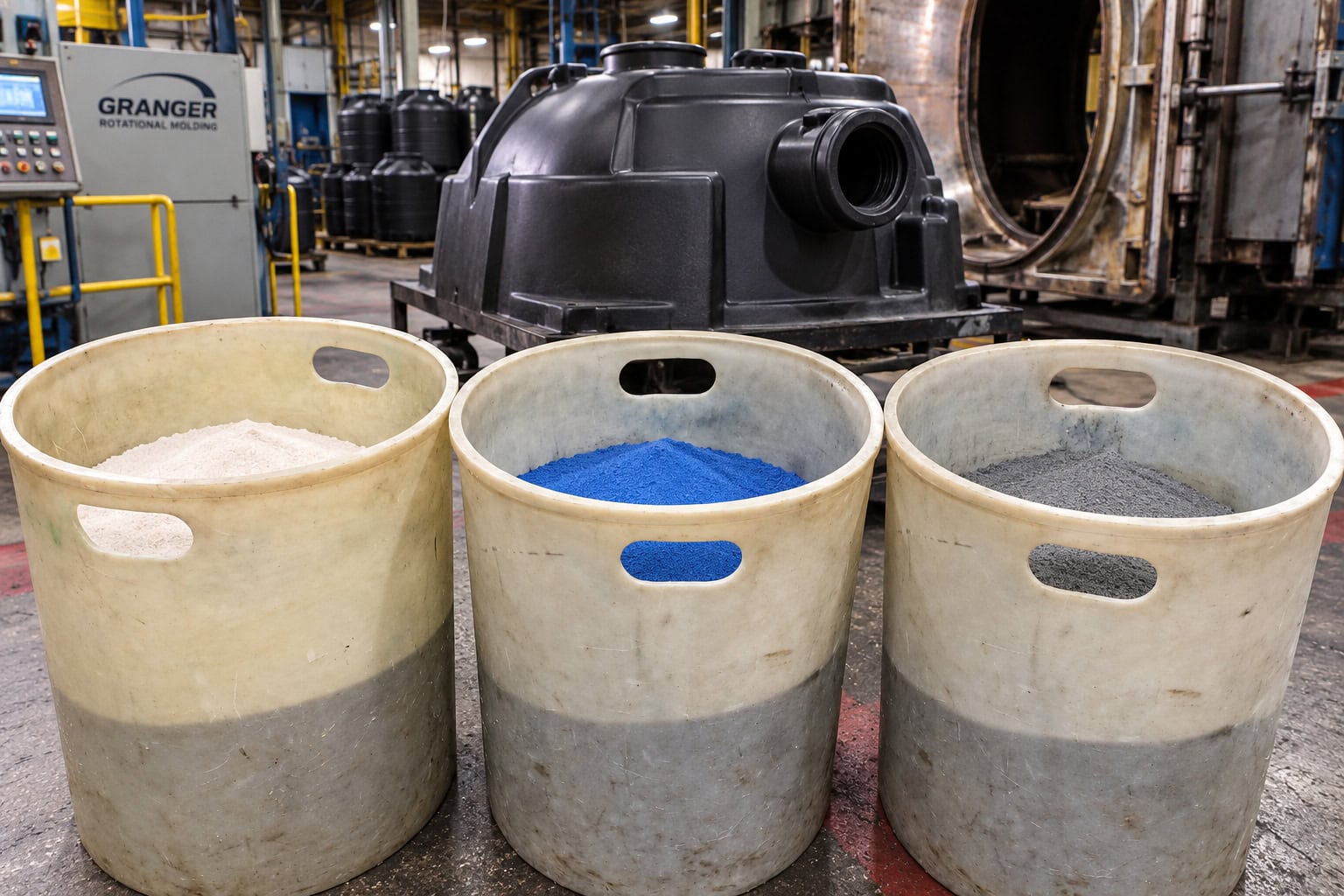
Polyethylene (PE) is by far the most widely used family of materials in rotational molding. Its combination of processability, toughness, chemical resistance, impact performance, design flexibility and cost makes polyethylene suitable for everything from industrial containers and material-handling products to tanks, recreational products, marine components and highly engineered custom rotational moldings.
But there is an important distinction:
“Polyethylene” is not a material specification.
Neither, for that matter, are labels such as LLDPE, MDPE or HDPE sufficient by themselves to determine whether a resin is appropriate for a particular rotational molding application.
Two polyethylene grades carrying different family classifications can have remarkably similar densities, melt indexes and performance characteristics. Conversely, two materials both sold as HDPE can behave very differently in the mold and in the finished product.
Selecting a rotational molding resin requires looking beyond the acronym on the datasheet.
At The Granger Plastics Company, polyethylene selection begins with the application—not with a favorite resin grade. The intended use of the product, its design, service environment, temperature, chemical exposure, required stiffness and impact performance, UV exposure, regulatory requirements, color, expected service life and manufacturing characteristics can all influence material selection.
Experience can often identify the right material from the outset. But one of the advantages of rotational molding is that once the necessary tooling has been produced, actual parts can often be molded in multiple candidate materials and evaluated under conditions representative of their intended use. This allows material selection to be validated in the finished product—not simply predicted from a datasheet.
Start With the Application, Not the Resin
One of the most common mistakes in material selection is beginning the conversation with a statement such as, “We need this molded from HDPE.”
Sometimes that requirement is well founded. Other times, HDPE was simply written on an early drawing, used on a previous product or selected because someone associates higher density with greater strength.
A better material-selection process starts with questions.
- What is the product expected to do?
- Will it be used indoors or outdoors?
- What minimum and maximum temperatures will it experience?
- Will it be subjected to impact, vibration, continuous loading or repeated handling?
- Will it contain or contact a chemical? At what concentration and temperature?
- Will the product experience pressure or vacuum?
- Does it require food-contact, potable-water or other regulatory compliance?
- Are there RoHS or customer-specific restricted-substance requirements?
- Does the product require a particular color, graphics or appearance characteristics?
- Will it be exposed continuously to sunlight?
- How long is the product expected to remain in service?
These questions begin defining the properties the material actually needs.
Is the Product New—or a Conversion From Something That Already Works?
Another important question is whether the product is completely new or is being converted from an existing manufacturing process.
Many rotationally molded products began as steel fabrications, fiberglass components, blow-molded products, injection-molded assemblies or products made through another manufacturing method.
If the existing product has performed successfully in the field, that history is valuable engineering information.
The objective should not be to ignore everything that worked simply because the manufacturing process is changing. The rotationally molded design should preserve the performance characteristics the application requires, address shortcomings in the existing product and take advantage of opportunities that rotational molding creates.
Material selection becomes part of that process.
Why Polyethylene Selection Is Different in Rotational Molding
Rotational molding is fundamentally different from injection molding and many other plastics processes.
During molding, polyethylene powder is placed inside a hollow mold. The mold is heated while rotating biaxially, allowing the material to progressively melt, adhere to the mold surface and consolidate into the finished part.
There is no injection pressure forcing molten plastic through the geometry.
That distinction matters.
The material must flow, sinter and consolidate properly while interacting with the geometry of the part, mold construction, heat transfer, oven cycle and rotational parameters.
As a result, selecting a resin based exclusively on a mechanical-property table can overlook a major part of the equation.
A material may have excellent published physical properties yet be a poor choice for a particular geometry or manufacturing process.
The resin has to perform both in the application and in the mold.
LLDPE vs. MDPE: Don't Get Hung Up on the Label
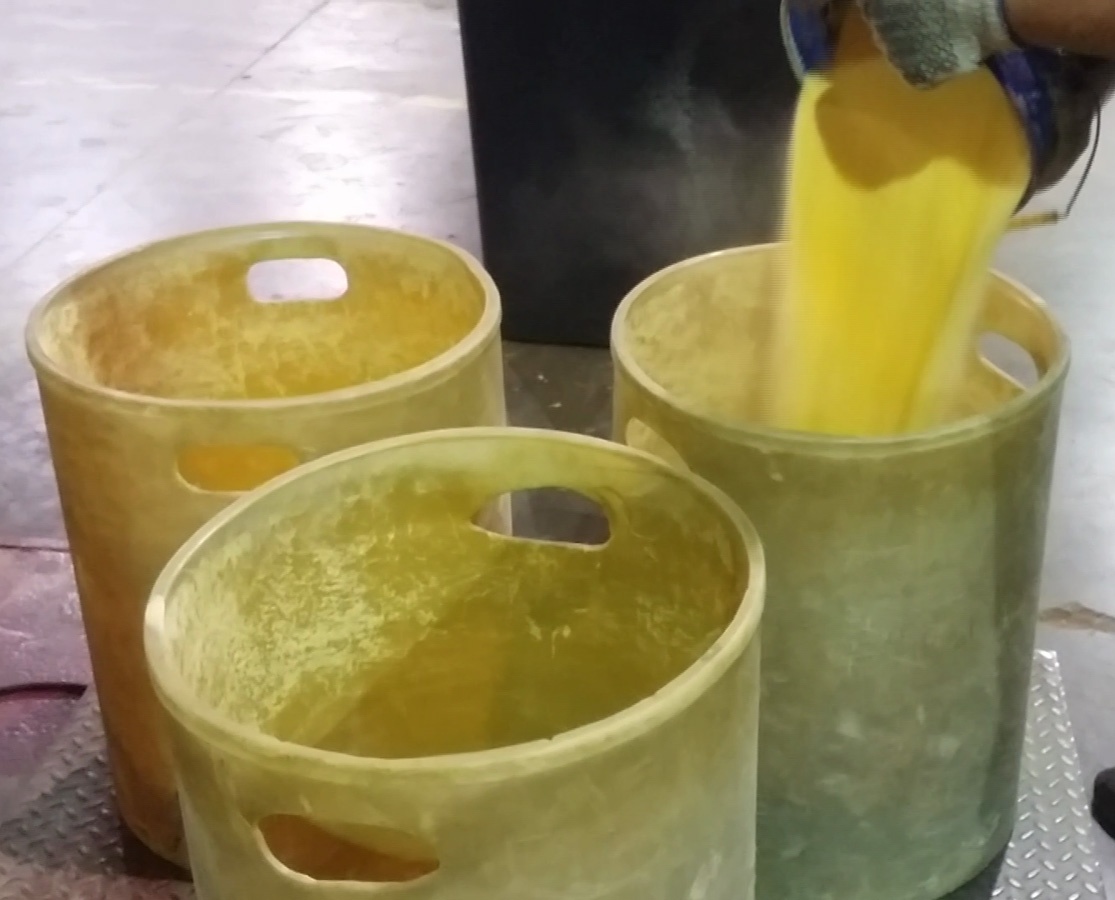
LLDPE and MDPE are common terms in rotational molding, but the distinction between them can be much less meaningful in practical resin selection than the labels suggest.
Consider two commercially available rotational molding grades. One hexene copolymer marketed as LLDPE has a density of approximately 0.938 g/cm³ and a melt index near 3.3 g/10 min. A commercially available hexene copolymer marketed as MDPE has a density of 0.938 g/cm³ and a melt index of approximately 3.5 g/10 min.
On paper—and frequently in actual rotational molding applications—the two materials occupy remarkably similar territory.
That does not mean LLDPE and MDPE are scientifically meaningless classifications. It means the classification alone tells an engineer far less than the actual properties of the specific resin grade.
This is why asking simply, “Should this product be LLDPE or MDPE?” may not be the most useful question.
A better question is: Which specific polyethylene grade provides the combination of properties, processing characteristics and consistency this product requires?
HDPE: Higher Density Doesn't Tell the Whole Story Either
HDPE is often selected when an application requires greater rigidity, higher modulus or other performance characteristics associated with higher-density polyethylene. It is frequently considered for tanks, chemical-handling products and applications where stiffness is particularly important.
But HDPE is not one material.
Individual rotational molding HDPE grades can differ substantially in density, melt index, stiffness, environmental stress crack resistance, low-temperature impact, heat performance and processing characteristics.
Some HDPE rotational molding grades offer excellent low-temperature impact performance. Others emphasize stiffness, flow, chemical resistance, processing characteristics or a different balance of properties.
When a specification calls for HDPE, the next question should be: Which HDPE—and why?
How Much Can Rotational Molding PE Grades Overlap?
The following commercially available polyethylene grades illustrate how significantly properties and classifications can overlap. They are provided as technical examples—not as an approved-material list or a recommendation that any particular grade is appropriate for every application.
Granger evaluates material requirements based on the product, service environment, processing requirements and performance objectives.
| Example Grade | Supplier Classification | Density (g/cm³) | Melt Index (g/10 min) | Approx. Flexural Modulus | -40°F Impact, 1/8" | -40°F Impact, 1/4" |
|---|---|---|---|---|---|---|
| ExxonMobil LL8460 | LLDPE | 0.938 | 3.3 | ~93,000 psi | 64 ft-lb | 190 ft-lb |
| NOVA TRx0338-U | MDPE | 0.938 | 3.5 | ~110,200 psi | 57 ft-lb | 200 ft-lb |
| NOVA RMs341-U | sHDPE | 0.941 | 3.5 | ~119,900 psi | 70 ft-lb | 170 ft-lb |
| Chevron Phillips TR-942 | HDPE | 0.943 | 2.0 | ~105,000 psi* | 68 ft-lb | 180 ft-lb |
| ExxonMobil HD8760 | HDPE | 0.948 | 5.0 | ~150,000 psi | 55 ft-lb | 140 ft-lb |
Important: Values are presented to demonstrate the range and overlap among commercial rotational molding polyethylene grades, not to rank the materials. Test methods, specimen preparation and reporting methods can differ between manufacturers. Flexural modulus values in particular may be reported using different methods, including tangent or secant measurements. Current manufacturer technical data should be reviewed before making a material-selection decision.
The table demonstrates why resin-family names should be treated as a starting point. The LLDPE and MDPE examples have identical published densities and nearly identical melt indexes. Meanwhile, an HDPE example at 0.941 g/cm³ sits remarkably close to both.
Material families are useful starting points. They are not material specifications.
What If Your Existing Product Already Specifies a Particular Resin?
Existing material specifications are valuable starting points, particularly when a product has an established history of successful field performance.
When evaluating a transfer tool, supplier change or conversion from another molding source, Granger first seeks to understand why the existing material was selected and which properties are responsible for the product's performance.
Rather than assuming that a familiar trade name is the only material capable of meeting the requirement, comparable candidate grades can be evaluated based on density, melt index, impact performance, ESCR, UV stabilization, regulatory requirements, processing behavior and other application-specific properties.
Where appropriate, trial parts can then be molded and evaluated before a material change is finalized.
A change in molder does not necessarily require a change in product performance—even when an alternative resin grade is ultimately selected. The objective is to preserve or improve the properties that made the existing product successful while establishing a consistent, repeatable manufacturing process.
Melt Index Matters—but Only in the Context of the Product Design
Melt index is another property that can be misunderstood.
In simplified terms, melt index provides information about how readily a polymer flows under specified test conditions. In rotational molding, that can have significant consequences for how material moves through and consolidates around the geometry of a part.
But there is no universally “best” melt index.
The appropriate melt index depends partly on what the resin has to accomplish inside the mold.
Molded Threads Are a Good Example
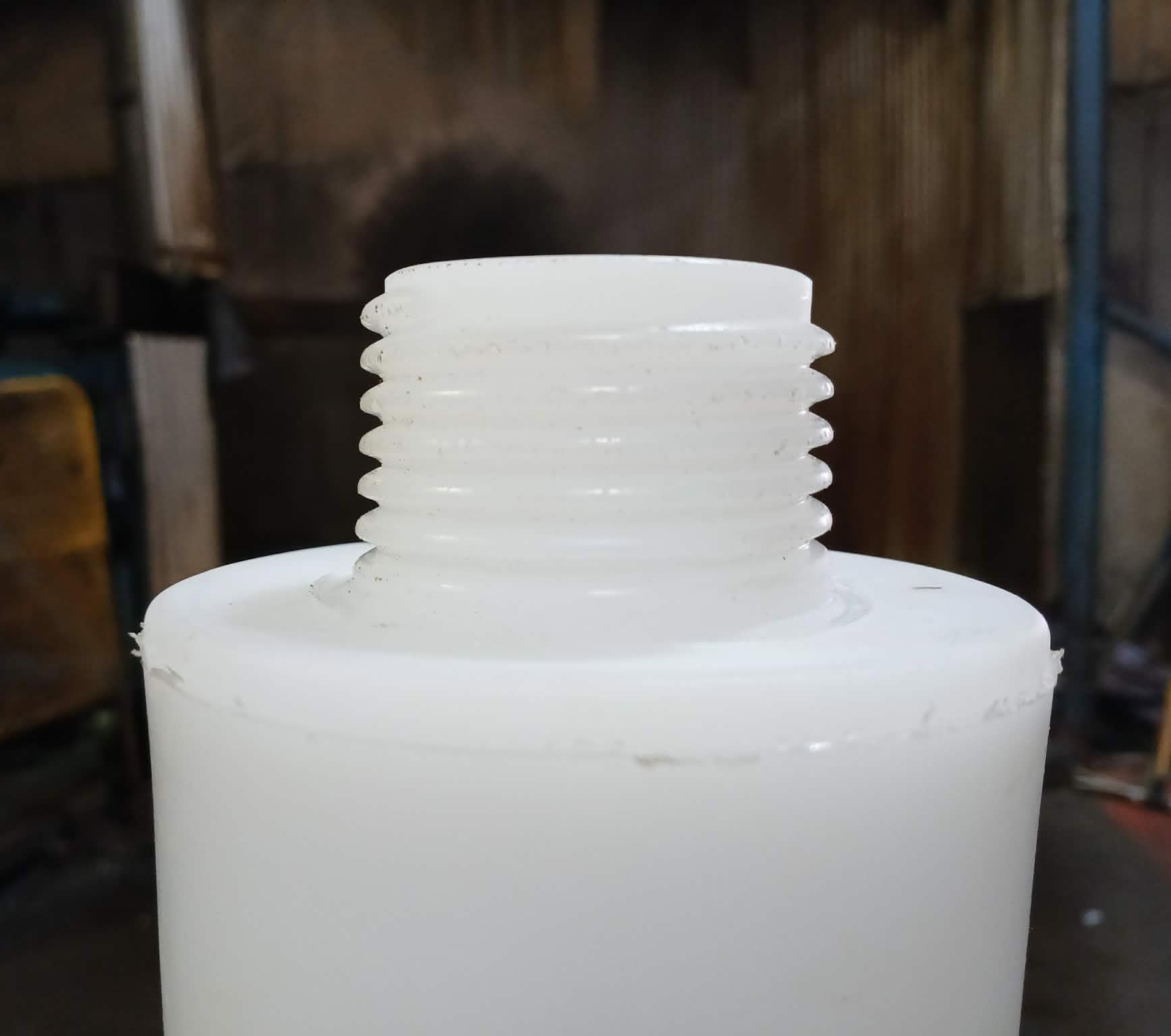
Consider a rotationally molded product with molded threads for a screw-on cap or lid.
Those threads create geometry the polyethylene must reproduce adequately during molding. If the selected material does not flow sufficiently into those features under the established process conditions, the resulting threads may contain incomplete areas or voids.
A cap that was designed correctly may then fail to engage as intended—not because the basic concept of a molded thread was wrong, but because the combination of material, geometry and processing did not produce the necessary feature.
Similar problems can occur around kiss-offs, narrow passages, complex transitions and other difficult areas of a rotationally molded design.
Changing the Resin Isn't Always the Answer
When material does not properly fill or consolidate around a feature, simply changing to a higher-flow resin may not be the correct solution.
The rotational molding mold may be modified to change local heat transfer. The heating cycle may be adjusted. Rotation ratios, powder characteristics, charge weight, venting, mold design and other processing variables may need evaluation.
In some situations additives may be suggested to alter processing behavior. However, additives should not become a substitute for correcting a fundamental material-selection, design or heat-transfer problem.
The objective is not to produce one acceptable sample. The objective is to establish a manufacturing process capable of repeatedly producing acceptable parts.
Melt index isn't a substitute for good product and mold design.
A Datasheet Is a Starting Point, Not a Product Qualification
Resin technical data sheets are extremely useful. They allow engineers and molders to compare properties such as density, melt index, tensile performance, flexural modulus, environmental stress crack resistance, heat-distortion temperature and low-temperature impact.
But standardized material testing should not be confused with qualification of the finished product.
Low-temperature impact provides an excellent example.
Rotational molding resin datasheets commonly publish impact performance using standardized rotationally molded samples at -40°C, which is also -40°F. Those numbers are valuable for comparing materials tested under similar conditions.
But your finished product probably isn't a flat 1/8-inch test plaque.
A real rotationally molded product has geometry. It has corners, radii, ribs, molded features, varying stresses, attachments and an actual wall thickness. It has also experienced the thermal history of its production cycle.
All of those factors can affect finished-product performance.
Material qualification is not product qualification.
Trial Parts Can Answer Questions a Datasheet Cannot
One of rotational molding's advantages is that after a production mold has been created, it may be possible to mold trial parts using multiple suitable polyethylene grades.
An application might be evaluated in several candidate linear polyethylenes, one or more HDPE grades or another suitable formulation.
Now the customer is not merely comparing numbers on paper. They can compare actual molded products.
Those parts can be evaluated internally, field tested or sent to an independent laboratory for whatever product-level testing the application requires.
Chemical Resistance Is Not a Yes-or-No Question
Polyethylene is known for excellent resistance to many chemicals, which is one reason rotational molding is widely used for tanks, intermediate bulk containers and chemical-handling products.
But asking, “Is polyethylene resistant to this chemical?” is often an incomplete question.
Proper evaluation should consider:
- The exact chemical or chemical mixture
- Concentration
- Normal operating temperature
- Maximum temperature
- Duration of exposure
- Continuous versus intermittent contact
- Pressure or vacuum
- Mechanical stress
- Indoor versus outdoor service
Temperature can be particularly important. Chemical-resistance charts frequently provide separate recommendations at different temperatures because a polymer that performs well with a chemical at approximately room temperature may behave differently at elevated service temperatures.
Chemical compatibility should be evaluated against the actual service environment—not simply against the chemical's name.
When the consequences of failure are significant, published compatibility information should be treated as screening data and the proposed resin/application combination should be evaluated appropriately before final production.
ESCR Can Be Just as Important as the Initial Strength of the Part
Environmental Stress Crack Resistance, or ESCR, describes a material's resistance to cracking when mechanical stress and certain environmental agents act together.
That can be particularly important for containers, tanks and products subjected to long-term loads or chemical exposure.
Published ESCR performance can vary considerably among rotational molding grades, including among materials that would all broadly be described as polyethylene or HDPE.
The exact test conditions matter as well. Concentration, temperature, specimen preparation and test method must be considered before comparing values from different sources.
An impressive number without understanding how it was generated can be misleading.
UV Stabilization Matters for Outdoor Rotationally Molded Products
A rotationally molded product expected to spend years outdoors should not be treated the same way as a product designed exclusively for indoor service.
Ultraviolet radiation can degrade polymers over time, affecting mechanical properties and appearance.
For this reason, The Granger Plastics Company places significant importance on UV stabilization in materials intended for outdoor applications.
With the exception of specifically selected reprocessed material systems, Granger's normal material practice is to use resin with manufacturer-certified UV stabilization appropriate to the application rather than attempting to save a small amount of material cost by eliminating important stabilization packages.
UV ratings should always be interpreted according to the manufacturer's test method and documentation. A designation such as UV-15, UV-20 or another stabilization rating should not automatically be translated into a guaranteed number of calendar years that a finished product will survive outdoors.
Real-world exposure depends on geography, orientation, temperature, color, wall thickness, stress, service environment and other factors.
Don't Forget the Pigment
Outdoor durability is not solely about protecting the base polymer.
The color system matters too.
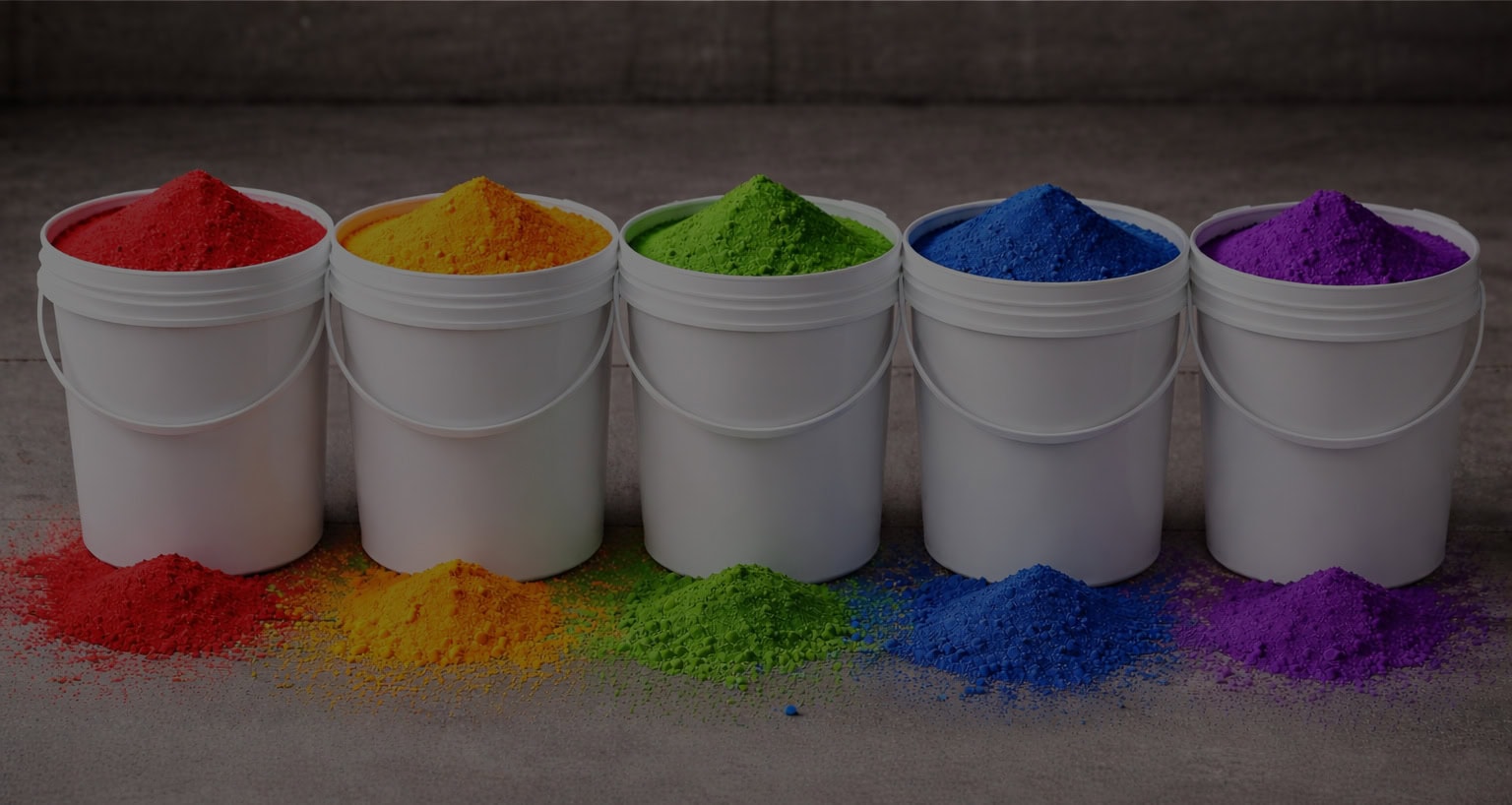
Granger requires pigments used for applicable outdoor products—including appropriate dry-blended pigment systems—to have suitable UV stabilization and light stability.
A product can remain structurally functional yet develop unacceptable appearance changes if the pigment system was poorly selected.
Structural UV durability and colorfastness are related considerations, but they are not identical.
Real-World Service History Still Matters
Laboratory testing provides controlled comparisons. Field history provides another valuable source of information.
Granger has seen rotationally molded products it manufactured remain successfully in service outdoors for many years, including refuse containers with more than a decade of service inside a Major League Baseball stadium and tornado shelter components approaching two decades in the field.
Those examples are not warranties that every polyethylene product will achieve the same lifespan. They demonstrate why material quality, stabilization, design, processing and application-specific engineering matter when long-term outdoor performance is expected.
Crosslinked Polyethylene: Specialized Performance for Specialized Applications
Crosslinked polyethylene, commonly called XLPE, represents another category of polyethylene available to rotational molders.
XLPE can be considered for applications involving elevated temperatures, aggressive chemical environments and certain demanding fuel or tank applications.
Crosslinking changes the molecular structure during processing and can provide performance characteristics that conventional thermoplastic polyethylene cannot duplicate.
But XLPE is not automatically an “upgrade” from conventional polyethylene.
It typically carries additional material and processing considerations, including cost, manufacturing requirements and end-of-life or reprocessing differences.
Material safety should also be evaluated at the formulation level. Specific crosslinking systems, additives and processing chemistry should be reviewed using current supplier Safety Data Sheets rather than making assumptions about XLPE as a generic material family.
For many rotational molding applications, a properly selected conventional polyethylene provides the required performance without the additional complexity of a crosslinked system.
The question is not, “Is XLPE better?” The question is, “Does this application require what XLPE provides?”
Certified Prime Virgin Resin vs. Off-Grade Polyethylene
Material purchasing decisions sometimes focus on price per pound.
That can be a very expensive way to save money.
A few cents per pound of resin becomes insignificant if material variability contributes to processing problems, rejected production, inconsistent products, warranty claims or a failure in the field.
This is one reason Granger strongly favors certified prime virgin polyethylene from established resin manufacturers for applications where consistency and performance matter.
A branded prime resin provides an identified grade produced to defined specifications, with published properties and a known additive package.
Off-grade material is different.
Off-grade does not automatically mean unusable material, nor does every pound of off-grade polyethylene have poor properties. However, material may be sold outside the manufacturer's normal prime-grade stream because one or more characteristics do not meet the normal prime specification or because its properties do not fit the normal prime product designation.
Depending on the material, variation can involve characteristics important to rotational molding—including melt index, density, color, stabilization or other properties.
That uncertainty matters.
You Aren't Just Buying Resin. You're Buying Repeatability.
Suppose a rotational molding process has been established around a specific certified prime resin.
The oven cycle has been developed. Rotation ratios have been established. The material flows properly through the design. Molded threads reproduce correctly. Kiss-offs form as intended. Wall distribution is acceptable. Finished parts repeatedly meet requirements.
Now substitute a material whose melt index, density or additive package varies.
The mold hasn't changed. The product drawing hasn't changed. The molding machine hasn't changed.
But one of the fundamental process inputs has.
Problems that appear to be processing problems can actually originate in material variability.
You aren't just buying resin. You're buying repeatability.
Reprocessed and Recycled Polyethylene Have a Place—But Not Everywhere
Reprocessed or recycled polyethylene should not automatically be characterized as either “bad material” or the environmentally superior choice for every application.
The correct question is whether it is appropriate for the product.
Granger does use reprocessed materials in selected applications where their characteristics make sense.
Laundry carts, bulk storage containers and other products with suitable service requirements can be excellent candidates, particularly when exact color matching, long-term outdoor UV exposure or critical structural performance is not the primary requirement.
Reprocessed polyethylene has already experienced at least one thermal history and generally should not be assumed to have properties identical to certified prime virgin resin.
Color flexibility can also be limited. Black, gray and similar colors are common choices when recycled-content streams are involved.
Granger has an advantage in certain controlled reprocessed material programs because the company can know the original base material before reprocessing and can restore selected UV stabilizers, antioxidants and other additive packages as appropriate.
That is very different from purchasing an unidentified stream of inexpensive recycled polyethylene and assuming its performance will match prime resin.
Some customers also specifically request recycled content to meet corporate sustainability objectives, procurement requirements or project-specific environmental goals. In those situations, recycled content can be incorporated intelligently when the application permits it.
Where Granger Draws the Line
As a matter of Granger material-selection policy, reprocessed resin is not selected for critical structural outdoor applications where long-term material performance is essential.
Granger likewise does not use reprocessed resin for its food-contact or medical-contact applications.
That should not be interpreted as a universal statement that every recycled polymer is legally prohibited from every regulated application. Regulatory suitability depends on the particular material, process, end use and applicable requirements.
It is a manufacturing and risk-management decision based on matching material history and consistency to the consequences of the application.
Food Contact, Potable Water and Regulatory Requirements Need to Be Identified Early
Regulatory requirements should not be an afterthought once a resin has already been selected.
If a rotationally molded product will contact food, potable water or another regulated substance, that information should be part of the original material-selection process.
Likewise, requirements involving RoHS or customer-specific restricted-substance specifications should be identified before production materials, pigments and additives are finalized.
A polyethylene family may contain both grades with relevant regulatory documentation and grades intended for entirely different uses.
Even when a resin manufacturer identifies a grade for food-contact or potable-water applications, the conditions and limitations of that documentation matter.
The correct question is never simply, “Is polyethylene food safe?” It is: “Is this exact resin, including the color and additive system, appropriate and documented for this specific intended use?”
Trial Molding Can Resolve Questions a Spreadsheet Cannot
Engineering analysis and supplier data should narrow material selection to appropriate candidates.
But rotational molding offers another valuable development tool.
Once suitable tooling exists, candidate materials can often be molded in the actual product.
Instead of debating whether a slightly more flexible polyethylene or a higher-modulus HDPE will perform better, trial parts may allow the engineering team to evaluate both.
- Does the stiffer material actually make the product perform better?
- Does it make the product more susceptible to impact damage in its real service environment?
- Does a lower-melt-index resin create problems around a difficult molded feature?
- Does one resin release from the mold better?
- Does a particular grade reproduce molded threads more consistently?
- How does the finished product behave at low temperature?
- How does it perform when filled, dropped, loaded, stacked, transported or otherwise used as intended?
For appropriate applications, those trial parts can then undergo field evaluation or independent third-party testing.
This is where decades of rotational molding experience becomes particularly valuable.
Material selection is not simply a search for the highest number on a technical data sheet.
The Stiffest Resin Isn't Necessarily the Strongest Choice for the Application
“Strong” is one of the most ambiguous words in plastics engineering.
Does strong mean stiff? Impact resistant? Resistant to environmental stress cracking? Able to withstand a static load? Able to flex repeatedly without cracking? Able to survive a drop at low temperature? Able to contain a chemical at elevated temperature?
These are not the same property.
A higher-modulus material may make a part feel substantially more rigid while a more forgiving polyethylene may perform better in an application involving severe impact.
Likewise, a resin with exceptional low-temperature impact may not provide the rigidity another product requires.
The objective is not to identify the polyethylene with the most impressive individual property. The objective is to identify the material whose combination of properties best matches the product's actual requirements.
The Least Expensive Resin Isn't Necessarily the Lowest-Cost Material
Raw-material price is visible immediately.
The cost of the wrong material may not become visible until much later.
Poor material selection can contribute to longer molding cycles, difficult processing, scrap, inconsistent features, assembly problems, warranty claims, shortened product life and field failures.
Conversely, the most expensive resin available is not automatically the best choice either.
Using an exotic or over-engineered material when a conventional prime polyethylene meets every requirement adds cost without necessarily adding value.
Good material selection finds the appropriate balance.
A Practical Rotational Molding PE Selection Process
Rather than selecting a resin from a family name alone, Granger's approach can be summarized as:
Application → Product Design → Service Environment → Required Properties → Candidate Resin Grades → Processing Evaluation → Trial Parts → Testing → Final Material Selection
The process may include evaluating:
- Product function and expected service life
- New design versus conversion from an existing product
- Required rigidity and flexibility
- Impact requirements
- Minimum and maximum service temperatures
- Chemical and environmental exposure
- ESCR requirements
- Outdoor and UV exposure
- Melt index and flow requirements
- Complex molded features, threads and kiss-offs
- Wall thickness and geometry
- Food-contact, potable-water or other regulatory requirements
- Color, pigment and light-stability requirements
- Prime virgin versus controlled recycled-content options
- Material consistency and traceability
- Processing characteristics and production repeatability
- Actual trial parts and application-specific testing
Not every product requires an exhaustive qualification program. But these questions should be asked before the resin is specified—not after a problem develops in production or in the field.
Choosing the Right Polyethylene for Your Rotationally Molded Product
Polyethylene dominates rotational molding for good reason.
Modern PE rotational molding resins offer an extraordinary range of toughness, stiffness, chemical resistance, low-temperature impact performance, UV stabilization and processing characteristics.
That variety is an advantage—but only when material selection is approached correctly.
Don't select a polyethylene simply because a previous drawing called for HDPE.
Don't assume MDPE is automatically better than LLDPE—or vice versa.
Don't assume the highest-density resin is automatically the strongest.
Don't select a material based on a single impact, ESCR or modulus number.
And don't sacrifice material consistency to save a few cents per pound without understanding the consequences.
Start with the application.
Understand the product design. Define the environment. Identify the properties that actually matter. Evaluate specific resin grades rather than relying exclusively on family names.
Then, when the application warrants it, mold the product and test the product.
The correct polyethylene for a rotational molding application isn't necessarily the resin with the best-looking datasheet. It's the resin that allows the finished product to perform the way it was designed to perform—consistently, repeatedly and throughout its intended service environment.
Talk With Granger About Your Rotational Molding Application
The Granger Plastics Company has been designing, developing and manufacturing rotationally molded products since 1994.
Whether a project involves a completely new product, conversion from another manufacturing process, transfer of an existing rotational molding program, material-selection challenge or an existing rotationally molded component that needs improvement, material selection should be considered together with product design, tooling, processing and end-use requirements.
Tell us what your product needs to do. We'll help determine what the polyethylene needs to do it.