

Roto-Lining for Steel Tanks and Process Vessels
A specification checklist for carbon steel and stainless steel tanks, vessels, basins, and pipe fittings
By RotationalMolding.com Editorial Team
Published November 16, 2026
A steel tank drawing can show every weld, nozzle, and flange and still leave a question for the lining supplier. Where should the polymer lining stop? A drain bore might need coverage through the opening. A flange might need lining across a specified portion of its face. Those details belong on the drawing before it goes to fabrication.
The Granger Plastics Company created this Roto-Lining Specification Checklist to help OEMs, metal fabricators, and plant engineers prepare a request for quote (RFQ). Use it for carbon steel and stainless steel tanks, process vessels, secondary containment basins, and pipe fittings.
What Is Roto-Lining?
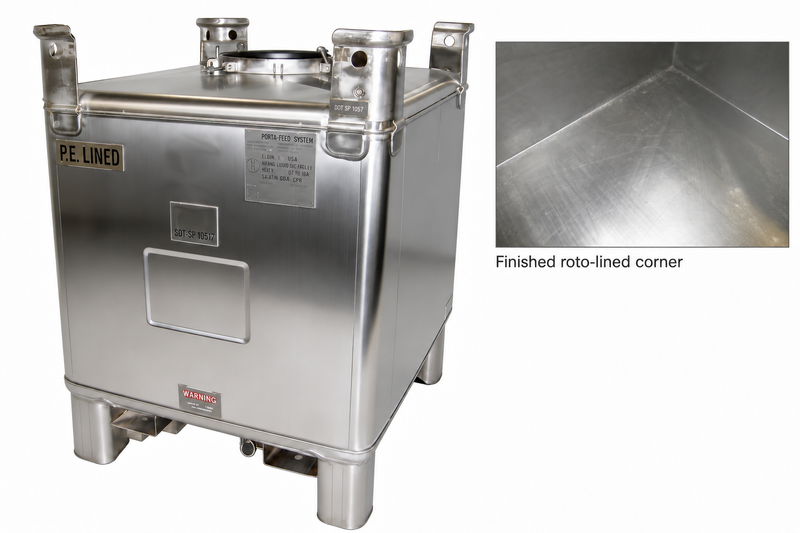
Roto-lining, also called rotolining or rotational lining, uses heat and rotation to form a seamless polymer layer inside a metal component. The metal shell provides structural support, and the lining separates the process media from the metal across the specified surfaces. A polyethylene-lined stainless steel tank is one example of how the two materials work together.
Granger provides industrial roto-lining for tanks, vessels, and piping components for specialty projects and production programs. The information below helps the lining supplier review the proposed material, component geometry, and inspection requirements before quoting.
Four Things to Specify Before Requesting a Roto-Lining Quote
1. Identify What the Lining Will Contact
List the process media, concentrations, expected contact time, and normal and peak temperatures. Include cleaning agents, their concentrations, and wash temperatures. If the equipment sees different media during startup, shutdown, or changeovers, include those conditions too.
For a secondary containment basin, identify the liquids it could receive and how long they might remain before cleanup. For equipment that is cleaned regularly, include the wash cycle even if it happens outside normal production. These details give the lining supplier the exposure information needed to review material options.
2. Mark the Lining Boundaries on the Drawing
Identify the shell material and grade, and send a dimensioned drawing with the current revision. Mark the surfaces that require coverage and show where the lining begins and ends at each opening or connection.
Consider a vessel with a flanged outlet. The drawing should show whether the lining extends through the nozzle bore, onto the flange face, or to another defined termination point. Include the mating component and gasket interface where they affect the finished assembly. For a basin, show where walls meet the floor and how the lining should terminate at drains, penetrations, and the upper edge.
3. Document Operating Conditions and Liner Requirements
Share the operating pressure or vacuum, temperature cycling, and exposure to solids, abrasion, or agitation where applicable. Include any customer-specified liner material, thickness, or documentation requirements. If the liner material or thickness is still open, mark it TBD so the supplier can review it with you.
For an existing tank or vessel, include photos, available drawings, and a description of its condition. Note any previous linings, repairs, or modifications you know about. The supplier can use that information to assess whether the component is a candidate for roto-lining.
4. Define How the Finished Lining Will Be Inspected
Specify the areas to inspect, the inspection method, the acceptance criteria, and the records you need with the finished equipment. Call out any areas that warrant particular attention, such as lining terminations at drains and flanges.
Where appropriate for the lining system, holiday testing can help detect pinholes and other discontinuities in a nonconductive lining over a conductive metal substrate. If your project requires holiday testing, include the applicable procedure and reporting requirements in the RFQ. See Granger’s tank lining and holiday testing capabilities.
What to Send Granger for a Roto-Lining Quote
Send your completed Roto-Lining Specification Checklist (PDF) with the latest drawings, equipment quantity, service conditions, and inspection requirements. For existing equipment, include photos and a description of its condition. If the drawing is still in development, highlight any flanges, drains, or other details you’d like to review before fabrication.
Email sales@grangerplastics.com or call (513) 424-1955 to discuss your project. For products that call for a standalone molded plastic component, explore Granger’s custom rotational molding capabilities.