










Rotational Molding & Custom Rotomolding Solutions
Precision Tooling & Fabrications for Superior Rotational Molding
Rotational molding, also known as rotomolding, is a plastics manufacturing process used to produce durable, seamless hollow products ranging from small custom components to extremely large industrial parts. Unlike injection molding or blow molding, rotational molding uses controlled heat and biaxial rotation to distribute powdered polymer throughout the mold, allowing manufacturers to create complex geometries, consistent wall thicknesses, molded-in features and large parts without high-pressure tooling.
From industrial storage tanks and aerospace components to material handling systems, playground equipment, agricultural products, and custom OEM solutions, rotational molding delivers unmatched flexibility in product design and manufacturing capabilities.
Granger Plastics Company brings more than three decades of hands-on rotational molding experience to custom product development and manufacturing. Our capabilities extend beyond molding production to include product design assistance, in-house mold fabrication and modification, resin selection, process development, secondary operations and the practical engineering required to move a product from concept into repeatable production.
What is Rotational Molding?
Proven Plastics Manufacturing Process for Durable Hollow Products
Rotational molding is a low-pressure manufacturing process in which a measured amount of polymer resin is placed inside a hollow mold. The mold is heated while rotating simultaneously on two axes, causing the material to melt and gradually coat the interior mold surface. Once the resin has fully formed against the mold walls, the mold is cooled while rotation continues, producing a seamless hollow part without using high injection pressures.
The rotational molding process generally follows four primary stages: loading, heating and rotation, cooling, and part removal. A measured amount of powdered polymer is loaded into the mold, heated while the mold rotates on two perpendicular axes, cooled while rotation continues, and then removed once the finished part has sufficiently solidified.
Polyethylene (PE) is the most widely used family of materials in rotational molding, with LLDPE and MDPE commonly selected for their combination of impact resistance, durability, processability and design flexibility.
- Excellent impact resistance
- UV stability
- Chemical resistance
- Long service life
- Cost effectiveness
- Design flexibility
Other materials may also be used in rotational molding when an application requires different stiffness, temperature performance, chemical resistance or other specialized properties. Material selection should be based on both the finished product requirements and how the resin will behave during the molding process.
When evaluating plastic manufacturing options, it is important to understand how rotational molding compares with other processes. Our detailed guide to rotational molding vs. injection molding explains the differences in tooling, production volume, part size, durability and design flexibility.
Why Rotational Molding?
The Advantages of Rotational Molding Over Other Plastics Manufacturing Methods
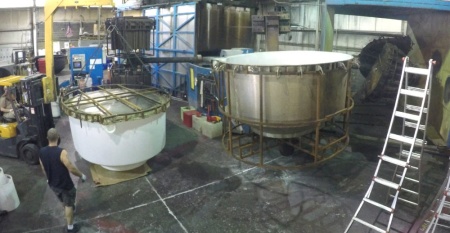
Manufacturers often choose rotational molding when a product requires a large or complex hollow geometry, seamless one-piece construction, relatively low tooling investment, or durable walls without weld lines. Because the process operates at low pressure, rotational molding tooling can often be less expensive than injection molding or blow molding tooling, particularly for large parts and low-to-medium production volumes.
Key Advantages of Rotomolding Include:
- Seamless one-piece construction
- Exceptional durability and impact resistance
- Lower tooling costs for large parts
- Ability to manufacture large hollow products
- Relatively uniform wall thickness
- Multi-wall and double-wall capabilities
- Integrated inserts and molded-in components
- UV-stabilized prime resin and UV-stable pigments
- Cost-effective short and medium production runs
Rotational molding costs are influenced by tooling complexity, part size, material selection, wall thickness, production volume, secondary operations and shipping requirements. Understanding these variables early in product development can help control both tooling investment and long-term manufacturing costs.
Rotational molding is often a strong fit for large hollow products, complex geometries and low-to-medium production volumes where tooling cost and design flexibility are important. For very high-volume production of smaller parts, injection molding or blow molding may sometimes be more economical.
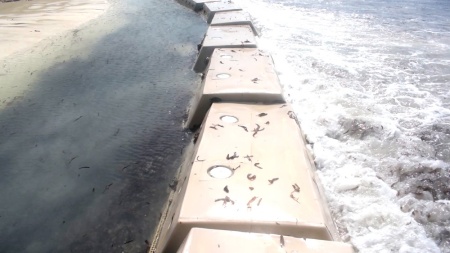
Rotational molding is particularly valuable when a product requires durability, large part size, complex hollow geometry or design features that would be difficult to manufacture economically with other plastics processes. For a deeper look at where the process offers the greatest advantages, explore Why Rotomolding?
What Experience Teaches You About Rotational Molding
Successful rotational molding involves considerably more than heating resin inside a rotating mold. Part geometry, resin characteristics, mold construction, heat transfer, venting, cycle development and cooling all interact to determine the quality of the finished product.
Features such as molded threads, inserts, deep draws, narrow passages and complex geometry can require careful attention to material flow and localized mold temperatures. A resin with excellent published physical properties may still perform poorly in a particular mold if its processing characteristics are not compatible with the geometry.
Likewise, changing materials is not always the correct solution to a molding problem. In many cases, adjustments to mold design, heat transfer, processing parameters or product geometry can improve resin laydown, reduce voids and produce more consistent parts.
This is why experienced rotational molding engineering begins with the entire manufacturing system—not simply the nominal material specification.
Rotational Molding Design
Engineering Products Specifically for Rotomolding Success
Designing a product for rotational molding requires a different approach than designing for injection molding, blow molding or fabricated assemblies. Wall thickness, corner radii, draft angles, parting lines, inserts, ribs, textures and overall geometry must work with the natural flow of material inside the rotating mold. Proper design can improve resin distribution, reduce internal stresses, simplify mold construction and produce a stronger, more consistent finished part.
Granger Plastics works with customers during product development to evaluate geometry, tooling requirements, material selection and manufacturability before production begins. Early design review can identify features that may create molding challenges, unnecessary tooling complexity or avoidable production costs before those issues become expensive to correct.
Proper rotational molding design helps:
- Reduce production costs
- Improve mold performance
- Enhance part strength
- Improve cosmetic appearance
- Simplify assembly
- Increase long-term durability
Molds for Rotomolding
Precision Tooling & Mold Fabrication for Rotational Molding
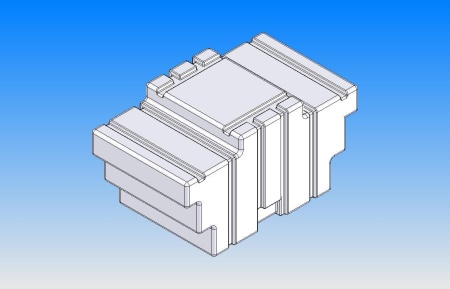
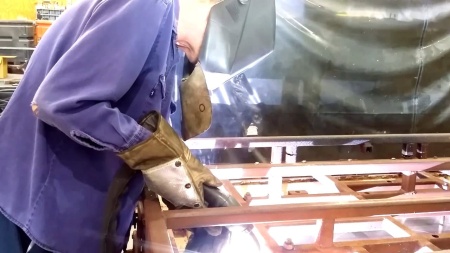
Every rotationally molded product begins with a mold that must do more than define the shape of the finished part. Mold construction influences heat transfer, cooling, venting, surface finish, dimensional consistency and cycle time. Molds for Rotomolding are commonly constructed from aluminum or steel, with the material and fabrication method selected according to part size, geometry, production volume and performance requirements.
Aluminum molds are commonly selected because they:
- Resist corrosion during cooling cycles
- Provide superior heat transfer
- Offer easier maintenance and modifications
- Produce excellent cosmetic finishes
Mold design and construction directly influence:
- Product consistency
- Surface finish
- Cycle times
- Production efficiency
- Long-term manufacturing costs
Metal Fabrications & Mold Shop
Complete In-House Tooling, Repairs & Fabrication Services
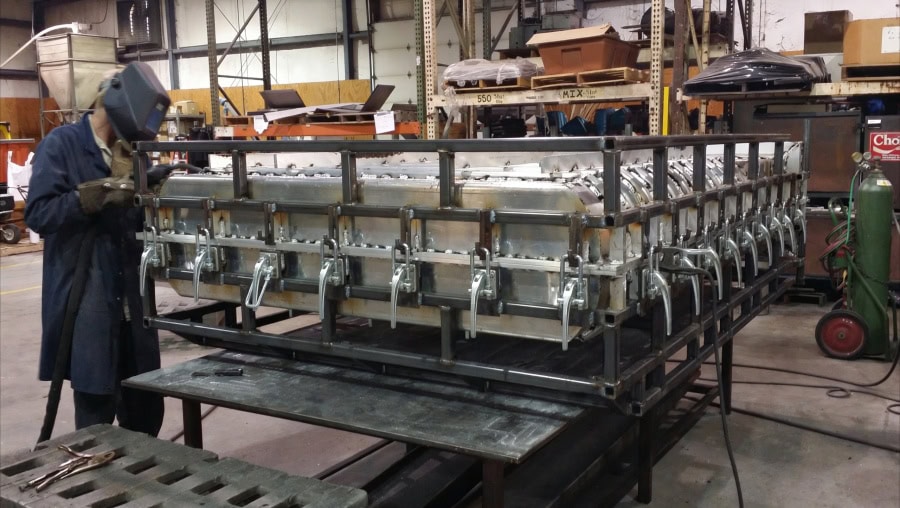
Maintaining mold fabrication and repair capabilities in-house gives Granger Plastics greater control over tooling changes, maintenance and production support. Our mold shop can fabricate, modify and repair rotational molding tooling while also supporting welding, structural metal fabrication and secondary assembly requirements associated with customer projects.
Our capabilities include:
- Mold fabrication
- Mold repairs and modifications
- Precision welding
- Structural metal fabrications
- Secondary assembly components
- Preventative tooling maintenance
Keeping tooling operations in-house allows for:
- Faster engineering changes
- Reduced downtime
- Lower shipping costs
- Improved production efficiency
- Better quality control
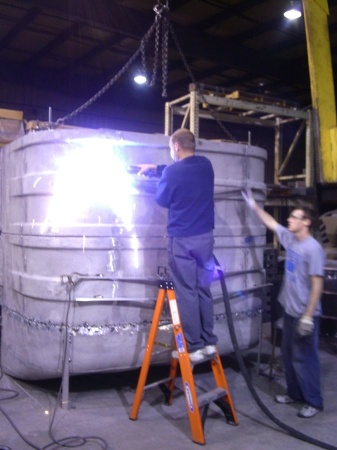
Learn more about Granger’s Metal Fabrications & Mold Shop capabilities for rotational molding tooling, repairs, modifications and custom fabrication.
Custom Rotational Molding
Engineered Rotomolded Solutions for OEMs & Manufacturers
Custom rotational molding is well suited for OEMs and manufacturers that need durable plastic products engineered around a specific application rather than an off-the-shelf design. The process can accommodate large hollow parts, complex geometries, molded-in inserts, double-wall construction, custom textures and other features that may be difficult or costly to achieve with competing plastics manufacturing methods.
Granger Plastics Company manufactures custom rotationally molded products for industries including:
- Aerospace
- Defense
- Agriculture
- Material handling
- Industrial equipment
- Environmental systems
- Recreation
- Commercial manufacturing
- Oil & Gas
- Marine
- Waste Management

Learn more about Granger’s Custom Rotational Molding capabilities for OEM products, large parts and specialized manufacturing applications.
Full-Service Rotational Molding Solutions
From Concept to Completion
Granger Plastics supports rotational molding projects from early product development through tooling, production and final delivery. Our capabilities include design and engineering support, mold fabrication and modification, rotational molding production, secondary operations, assembly, warehousing, packaging and fulfillment.
Our vertically integrated capabilities help customers:
- Reduce lead times
- Lower manufacturing costs
- Improve quality consistency
- Simplify supply chains
- Accelerate product launches
If you are developing a new rotationally molded product, improving an existing design, replacing another manufacturing process, or searching for an experienced U.S. rotational molding partner, Granger Plastics can help evaluate the product, tooling, materials and production requirements.
To discuss a new product, tooling project or custom rotational molding application, contact Granger Plastics Company to review your requirements with our team. You can also learn more about our broader manufacturing capabilities at GrangerPlastics.com.
Related Rotational Molding Resources
Rotational molding projects often require decisions involving product design, tooling, resin selection, production methods and cost. The following resources provide more detailed guidance on each of these areas.